The Fitbit Versa 4 series and the Apple Watch Series 11 collection sit at opposite ends of the smartwatch spectrum: one is a focused fitness companion built for multi-day stamina, the other a general-purpose wrist computer with clinical-grade sensing. This guide is designed to be saved and revisited, because it maps which wearable belongs to which person, where the real trade-offs sit, and which specifications should actually drive the decision. Buyers who shortlist both are usually weighing health depth against battery freedom, and the sections below resolve that tension with concrete detail rather than marketing language.
| Feature & Selling Point | Fitbit Versa 4 | Apple Watch Series 11 |
|---|---|---|
| Case Size and Weight | Single compact aluminum case, roughly 37g | 42mm and 46mm options, lighter aluminum builds |
| Display Type | AMOLED, always-on mode available | Always-On Retina, edge-to-edge glass |
| Rated Battery Life | Up to 6 days per charge | Up to 24 hours per charge |
| Charging Method | Proprietary magnetic pin charger | Magnetic fast-charge puck |
| Built-in GPS | Yes, with connected GPS fallback | Yes, dual-band GPS on cellular models |
| Heart Rate and Sleep | 24/7 heart rate, sleep stages, Daily Readiness Score | Heart rate, sleep score, hypertension notifications |
| Workout Modes | 40+ exercise modes | Broad activity library with Workout Buddy |
| ECG and Advanced Health | Not offered | ECG, blood oxygen, hypertension alerts |
| Water Resistance | 5 ATM, swim-proof | 50m, swim-proof |
| Connectivity | Bluetooth, Wi-Fi on supported models | GPS-only or GPS + Cellular, LTE calling |
| On-Wrist Payments | Fitbit Pay on select banks | Apple Pay, widely supported |
| Phone Compatibility | Android and iOS | iPhone only for full functionality |
| Subscription Layer | Fitbit Premium unlocks deeper insights | Core health features included, Fitness+ optional |
| Safety Features | Basic notifications only | Fall detection, Crash Detection, Emergency SOS |
| Best Suited To | Multi-day fitness tracking, mixed-phone households | iPhone users wanting health, safety, and apps |
| Positioning | Lower entry cost, longer stamina | Higher cost, deeper ecosystem |
The table exposes two decisive gaps: the Versa 4 wins outright on battery endurance and cross-platform freedom, while the Series 11 pulls ahead on medical-grade sensing, safety tooling, and cellular independence. Buyers rarely need a tiebreaker beyond those axes, which is why the sections below organize the decision around them rather than around surface styling.
Battery Endurance and Charging Routines
How often a watch must visit a charger shapes whether it gets worn overnight, and overnight wear is where sleep analytics live. The Versa 4 is rated for up to six days between charges, a figure that comfortably covers a working week plus a weekend, including several GPS sessions. The Series 11 is rated at up to 24 hours, meaning daily charging becomes a habit rather than an occasional chore. Neither figure is a flaw; they reflect different design priorities. Fitbit engineered the Versa 4 around continuous biometric sampling, while Apple allocated energy toward always-on display refresh, LTE radios, and on-device processing.
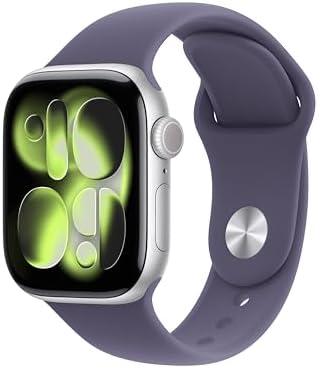
Charging hardware reinforces the split. The Fitbit Versa 4 Fitness with Daily Black Graphite GPS uses a proprietary magnetic pin charger that tops the cell up in under two hours from empty. The Apple magnetic fast-charge puck is quicker in short bursts, which suits a routine of 20-minute top-ups during a shower or breakfast. Travelers should note that both require their own cables, so packing discipline matters equally.
Health Sensing, Sleep Data, and Daily Readiness
Fitbit built its reputation on translating raw sensor data into plain-language guidance. The Versa 4 pairs 24/7 heart rate monitoring with sleep stage tracking and a Daily Readiness Score that weighs activity load, sleep quality, and heart rate variability. The Score is only fully unlocked with Fitbit Premium, a paid layer that some buyers treat as an additional running cost and others treat as the core value of the platform. The companion app has since been folded into Google Health, and Google states that it is built with Gemini for personalized coaching, an indication of where the platform is heading.
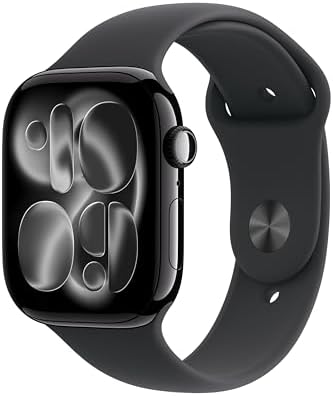
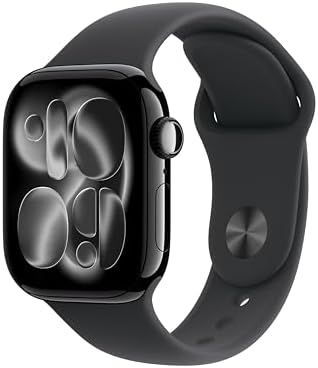
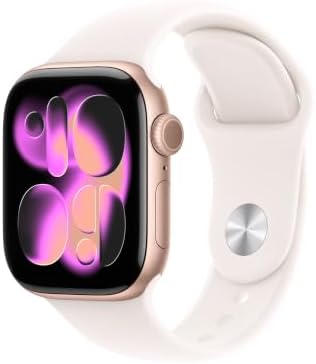
Apple positions the Apple Watch Series 11 [GPS 46mm] Jet Black Aluminum Black 46mm M/L GPS as a health-monitoring device first and a fitness tracker second. Apple lists hypertension notifications and a sleep score among its headline capabilities, alongside ECG and blood oxygen measurement on supported hardware. Those features are included at purchase rather than gated. The contrast is sharp: Fitbit offers deeper interpretation behind a subscription, while Apple offers broader clinical sensing with no equivalent paywall on core metrics.
Profile-oriented users should weigh two specifics. First, hypertension notifications are a screening prompt, not a diagnosis, and Apple frames them accordingly as an alert to seek clinical advice. Second, ECG availability varies by region and requires regulatory clearance, so buyers outside supported markets should verify what their local unit actually enables before treating it as the deciding factor.
Training Tools and the Workout Experience
For structured exercise, the Versa 4 covers the practical essentials with more than 40 exercise modes, built-in GPS, and connected GPS fallback when satellite lock is weak. Strength training, interval work, and swim sessions are all logged, and the Active Zone Minutes metric gives a clean weekly target that non-athletes can follow without deciphering training load theory. The device is deliberately focused: it tracks exercise well and declines to run third-party apps that would blur that purpose.
Apple frames the Series 11 around the same fundamentals but adds Workout Buddy, a feature Apple states is powered by Apple Intelligence, which delivers spoken mid-session encouragement and pacing commentary. GPS accuracy is stronger on cellular variants, where dual-band positioning reduces urban drift between tall buildings. The realistic distinction is depth versus breadth: the Apple platform supports third-party training apps, offline music, and structured plans from multiple providers, while Fitbit’s approach is self-contained and faster to learn.
- Choose Versa 4 if: the routine is running, gym work, swimming, and daily step targets, with minimal interest in app tinkering.
- Choose Series 11 if: training plans come from third-party services, music must stream offline, or cellular coverage needs to exist without a phone nearby.
- Consider neither yet if: multi-sport transitions and week-long expeditions matter more than wrist-based smart features.
Design, Build, and Wearing Comfort
The Versa 4 keeps a single compact aluminum case with a squared-off profile and an extensive band ecosystem that includes woven, silicone, and leather options. Its lighter build disappears on the wrist during sleep and sits well under a shirt cuff. Display brightness is adequate outdoors, and the AMOLED panel renders the app grid legibly, though the always-on mode shows less information density than Apple’s implementation.
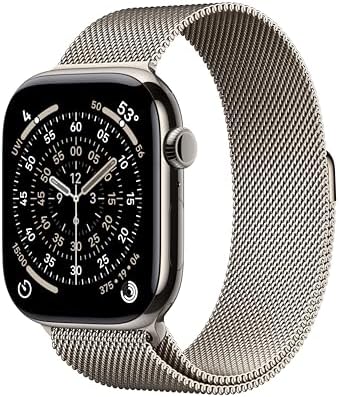
Apple offers two case sizes for the Series 11, letting buyers tune coverage to wrist size, and the edge-to-edge Retina glass produces noticeably thinner borders than Fitbit manages. The Jet Black aluminum finish is the stealth-oriented option in the line and resists visible scuffs reasonably well. Water resistance is effectively identical for everyday purposes: 5 ATM for the Versa 4 and a 50m rating for the Series 11, both suitable for pool laps and showering.
Comfort depends on the band more than the case. Two-piece sport bands on either model distribute pressure well for 24-hour wear, while metal link options on the Apple side add weight that some sleep trackers notice. Buyers planning overnight wear should prioritize a soft fluoroelastomer or woven band from the start.
Smart Features, Safety, and Everyday Utility
This is where the two watches diverge most. The Versa 4 handles notifications, alarms, timers, and on-wrist payments through Fitbit Pay at participating banks, but it lacks a full app store and declines to run productivity software. That restraint is intentional and keeps the interface quick.
The Series 11 carries Fall Detection, Crash Detection, and Emergency SOS, features Apple frames as core to the device rather than optional extras. Cellular variants place calls, stream music, and send messages without a paired iPhone nearby. Buyers who commute, run alone, or travel with family dependents often treat these capabilities as the deciding justification for the higher price, even when health metrics look broadly comparable on paper.
There is a compatibility constraint worth stating plainly. The Series 11 delivers full functionality only with an iPhone; Android users lose messaging, payments, and firmware updates. The Versa 4 works across both platforms, which makes it the more rational choice for households split between operating systems.
Cost of Ownership and Subscription Economics
Headline price is only the first line of the ledger. The Versa 4 asks less upfront and less per year for hardware replacements, but Fitbit Premium is where the daily readiness interpretation, deeper sleep breakdowns, and guided programs live. Buyers who ignore Premium still get solid tracking; buyers who subscribe should count a recurring annual fee against the purchase.
The Series 11 costs more initially, adds a further premium for cellular, and typically requires an iPhone already owned. Apple includes core sensing without a subscription, though Fitness+ is optional and priced separately. Across a three-year horizon, the gap narrows for anyone already inside Apple’s ecosystem and widens for anyone who owns an Android phone, since the Apple side effectively requires a phone purchase to be useful.
Which Watch Belongs on Your Wrist
The honest answer depends on phone ownership first and health ambition second. An Android user who wants reliable multi-day tracking, sleep coaching, and a modest outlay should stop comparing and buy the Versa 4. An iPhone owner who values ECG readings, hypertension alerts, fall detection, and phone-free connectivity should accept daily charging as the price of entry and choose the Series 11.
A third buyer exists in the gap: someone who owns an iPhone but wears a watch intermittently, forgets chargers, and dislikes notifications pinging a wrist. For that person the longer endurance of the Versa 4 outweighs the deeper sensing suite, and the saving funds a second device for serious training later. Neither watch is overqualified for its price band, and neither is a compromise if the match is right.
Smartwatch value ultimately comes down to how much data actually changes behavior. A watch that stays charged, feels invisible overnight, and reports metrics clearly will earn daily wear; a watch with better sensors that sits on a nightstand teaches nothing. Matching the device to the person, rather than chasing the longer specification sheet, is the decision that holds up long after the purchase.