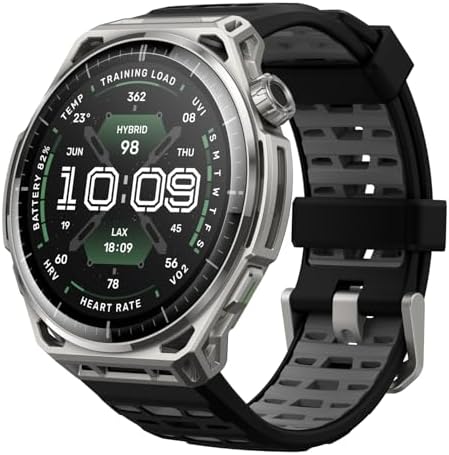
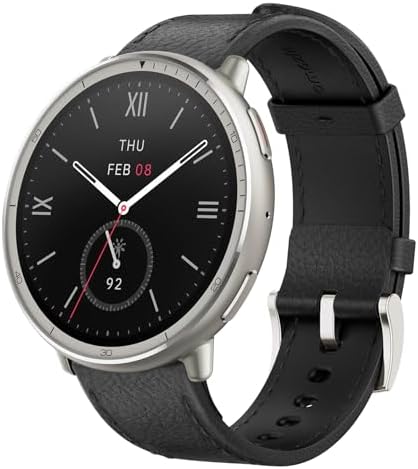
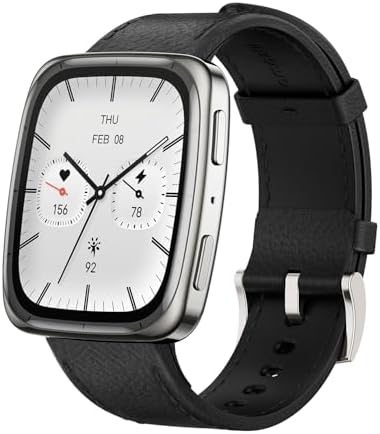
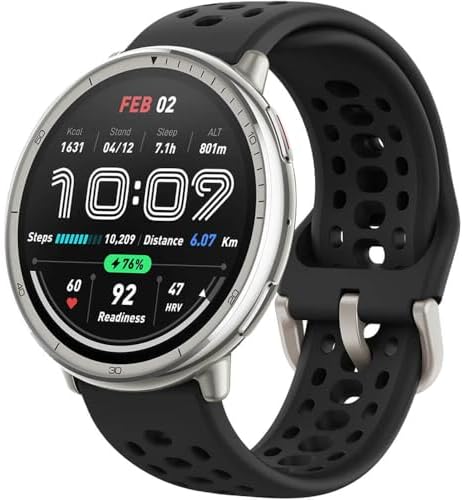
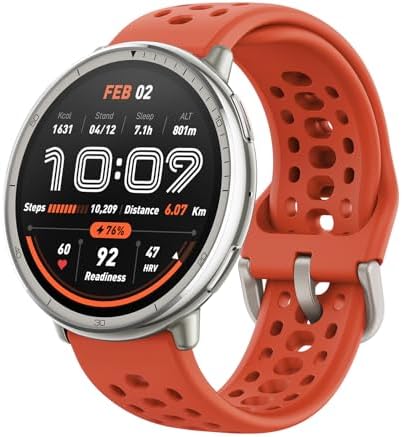
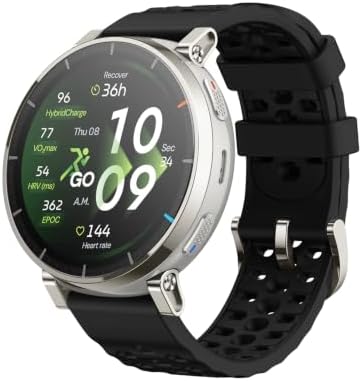
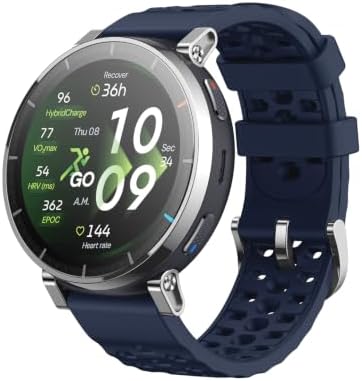
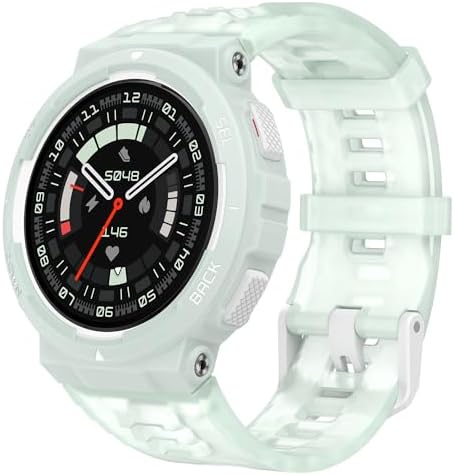
The Amazfit Balance 3 and the Garmin Venu 4 approach the health-focused smartwatch from opposite directions. One carries a 48mm stainless steel case with a 1.5-inch sapphire-protected AMOLED display and a 21-day battery rating, while the other fits a 41mm case with a 1.2-inch AMOLED panel and a 10-day rating. This guide compares the specifications that actually change a purchase decision, from charging cadence to navigation tools and recovery metrics.
For anyone weighing the Amazfit endurance-first formula against Garmin analytics-driven platform, the table below sets out the core differences side by side.
| Feature and Selling Point | Amazfit Balance 3 | Garmin Venu 4 |
|---|---|---|
| Case Size and Weight Class | 48mm, substantial wrist presence | 41mm, compact fit |
| Display Panel | 1.5-inch AMOLED | 1.2-inch AMOLED |
| Glass Protection | Sapphire crystal | Chemically strengthened glass |
| Smartwatch Battery Rating | Up to 21 days | Up to 10 days |
| Satellite Positioning | Dual-band GPS | Multi-band GNSS with SatIQ |
| Offline Maps | Supported | Supported through Garmin Connect |
| Onboard Storage | 64GB | Limited music storage |
| Built-in Flashlight | Yes | Yes |
| Water Resistance | 5 ATM | 5 ATM |
| Sport Profiles | 180+ modes | 40+ activity profiles |
| Recovery Metric | Stress and sleep scoring | Body Battery energy monitoring |
| Contactless Payment | Supported, region dependent | Garmin Pay |
| Companion App Depth | Zepp app, streamlined | Garmin Connect, data rich |
| Best Suited For | Extended uptime and local media | Compact comfort and training analytics |
The table surfaces two decisive gaps. The Balance 3 doubles the smartwatch battery rating and adds sapphire glass plus 64GB of storage, while the Venu 4 counters with a smaller case, SatIQ positioning, Body Battery, and the deeper Garmin Connect analytics stack. Everything below explains which of those gaps matters for a given routine.
Battery Endurance and Charging Cadence
Charging frequency shapes daily ownership more than almost any other specification. Amazfit rates the Balance 3 at up to 21 days in smartwatch mode, which turns charging into a biweekly or monthly task. That matters for sleep tracking, because a watch that stays on the wrist overnight without a morning top-up produces more consistent recovery data.
The Venu 4 carries a 10-day rating in smartwatch mode as specified by Garmin. That figure still exceeds most mainstream smartwatches, but it sits in a different tier, and heavy GPS use narrows the margin further. Runners training outdoors several times per week will recharge the Venu 4 more often than the Balance 3.
For hikers, campers, and travelers who spend extended periods away from reliable power, the Balance 3 reserve is a practical advantage. For users who already charge on a fixed weekly schedule, the difference may matter less than wrist comfort.
Display, Case Size, and Wrist Presence
The Balance 3 pairs a 1.5-inch AMOLED panel with sapphire crystal, a combination that resists scratching from sleeves, desks, and car doors over years of daily contact. The 48mm stainless steel case gives the watch a presence closer to a field instrument than a fitness band.
The Venu 4 collection takes the opposite route. The 41mm variant, finished here in Lunar Gold with a Bone silicone band, sits flat against the wrist and slides under a shirt cuff. Its 1.2-inch AMOLED screen is smaller but bright and legible, and the reduced dimensions suit smaller wrists or anyone who dislikes a large case shifting during runs.
Neither approach is objectively superior. A larger display aids glanceability mid-workout, while a smaller case improves all-day comfort and sleep ergonomics.
Navigation, Maps, and Outdoor Tools
Both watches include a built-in flashlight, now a genuine utility for early-morning and late-evening activity rather than a novelty. The Balance 3 pairs it with dual-band GPS and offline map storage, while the Venu 4 uses multi-band GNSS with SatIQ, a power-management system that selects the GNSS mode meeting the accuracy requirement at any moment and preserves battery during long outings.
The 64GB of onboard storage in the Balance 3 stands out in this class. It accommodates offline map regions and media without the storage pressure common among fitness watches. Garmin counters with a mature navigation ecosystem refined across years of outdoor watch development, where route planning, breadcrumb navigation, and course following are well established inside Garmin Connect.
Trail runners who load routes in advance tend to prefer the Garmin workflow. Users who want music, podcasts, and maps stored locally without managing cloud transfers get more room from the Amazfit model.
Health Tracking and Recovery Metrics
Nightly recovery data now drives how many owners plan training. Amazfit covers heart rate, blood oxygen, sleep staging, and stress monitoring, and the long battery rating supports overnight wear without morning charging anxiety.
Garmin goes further with Body Battery, which aggregates stress, sleep, and activity into a single daily energy reading. Garmin states that the Venu 4 includes advanced health and fitness insights alongside its AMOLED display and flashlight. Athletes already following a structured plan often stay inside the Garmin ecosystem precisely because of that metrics framework.
- Body Battery: Garmin-only energy monitoring combining stress and sleep data
- Sleep staging: Available on both, with Garmin offering longer trend history
- Blood oxygen: Supported on both, useful for altitude adaptation and sleep checks
- Stress tracking: Provided on both platforms using different scoring methods
Someone upgrading from a basic fitness tracker will find either watch sufficient. Someone already invested in structured training will extract more from Garmin analytics depth.
Ecosystem, Payments, and Daily Convenience
Contactless payment is now a baseline expectation. The Garmin Venu 4 41mm Lunar Gold GPS works with Garmin Pay and a growing list of banks and cards. The Balance 3 also supports contactless payment, though regional bank availability varies and is worth verifying before purchase.
Both watches pair with iOS and Android phones and handle notifications, calls, and media controls. The practical difference sits in the companion app. Garmin Connect is a dense, data-rich platform that rewards users who enjoy reviewing charts and long-term trends. Amazfit’s Zepp app is cleaner and faster for casual users, though it offers less historical depth.
Sizing also drives daily use. The Amazfit Balance 3 48mm GPS asks the wearer to accept a large case, while the Venu 4 footprint is friendlier for slim wrists and formal clothing.
Who Should Buy the Amazfit Balance 3
The Balance 3 is the stronger pick for buyers who prioritize endurance above all else. A 21-day battery rating, a large sapphire-protected AMOLED display, dual-band GPS, and 64GB of storage suit travelers, campers, and long-distance athletes who want extended independence from a charger. The stainless steel case and 48mm dimensions also appeal to anyone who prefers visible wrist presence.
Who Should Buy the Garmin Venu 4
The Venu 4 suits buyers who value a lighter, smaller watch and want deeper training analytics. A 41mm case, Body Battery, Garmin Pay, and Garmin’s established navigation and health metrics make it the natural pick for runners, cyclists, and gym-goers tracking structured workouts.
The decision reduces to two questions: how often charging is acceptable, and how much analytical depth will actually be used. Buyers who want maximum uptime and local storage lean toward the Amazfit model, while those who want compact comfort and a mature training platform lean toward the Garmin model.
Both watches represent the current state of the health-focused smartwatch segment, and each addresses a different set of priorities. The right choice is the one matching daily habits rather than the longer specification sheet.