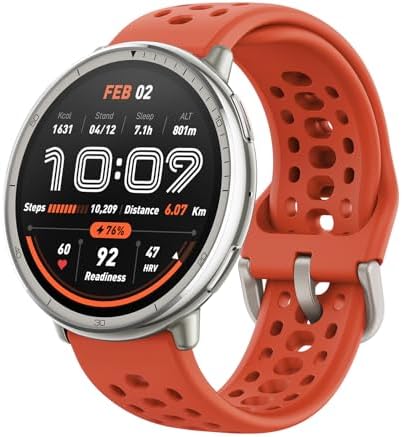
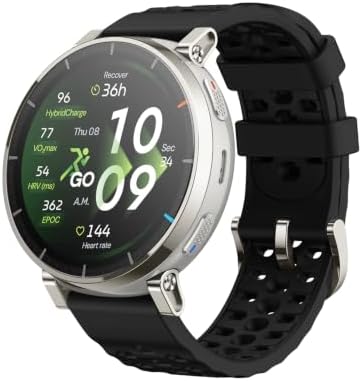
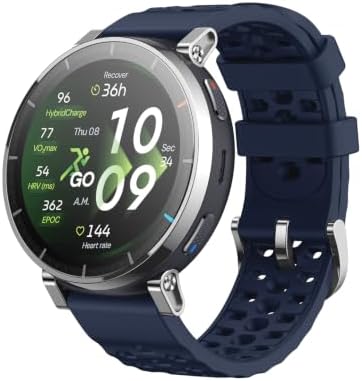
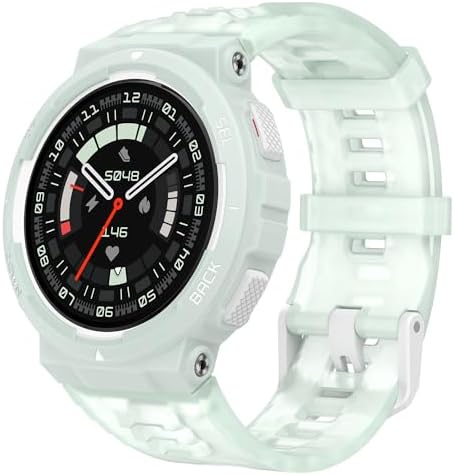
The Amazfit T-Rex 3 series and the Amazfit Active Max collection represent two distinct answers to a single question: how should a modern smartwatch balance endurance with everyday usability? This guide is designed as a definitive resource, comparing the two series across the specifications that matter most for a purchase decision. It outlines the real-world trade-offs and clarifies which type of user will be best served by each model.
| Buying Dimension | Amazfit T-Rex 3 | Amazfit Active Max |
|---|---|---|
| Core Design Brief | Rugged outdoor / military style | Slim lifestyle / all-day wear |
| Display Panel | 1.5″ AMOLED | 1.5″ AMOLED, 3,000 nits |
| Case Size & Mass | 48mm class, heavier build | 48mm, lighter build |
| Battery (Typical) | Up to 27 days | Up to 25 days |
| Battery (Heavy Use) | Up to 13 days | Not specified |
| GPS Endurance | 42 hours accurate, 114 hours long-battery | Standard GPS tracking |
| Onboard Storage | Offline map support | 4GB |
| Sport Modes | 170+ | 170+ |
| Offline Maps | Yes | Yes |
| Water Resistance | Water-resistant, rugged shell | Water-resistant |
| Smart Features | AI assistant, voice control | Smart features, app ecosystem |
| Strap System | 22mm quick-release | Standard quick-release |
| Best Use Case | Hiking, tactical, multi-day expeditions | Urban fitness, daily wear, bright-light visibility |
| Who Should Buy | Outdoor athletes and field users | Commuting fitness users wanting a lighter watch |
The most significant divergence lies in their endurance specifications. The T-Rex 3 publishes a 42-hour accurate GPS tracking mode and a 114-hour long-battery GPS mode, while the Active Max is engineered around a lighter chassis and a 3,000-nit display. These two facts are the primary drivers for most purchase decisions before any other specification is considered.
A Tale of Two Design Philosophies
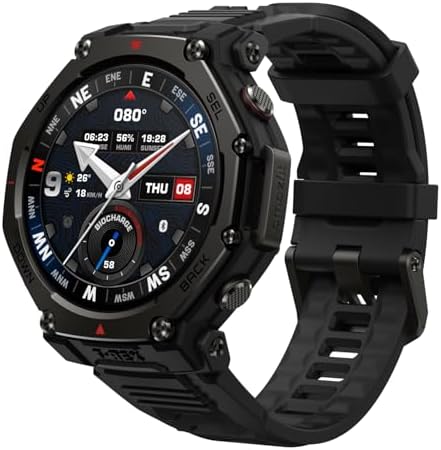
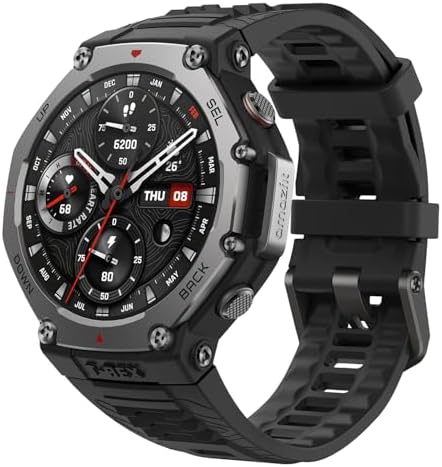
The Amazfit T-Rex 3 Smart Watch 1.5″ 48mm GPS is built around a military-style brief. Its case is deliberately thick and button-heavy, with raised bezels and a polymer shell designed to withstand rock scrapes and allow for operation with cold-weather gloves. Amazfit positions the T-Rex series as rugged hardware for users who treat a trail map as a primary tool.
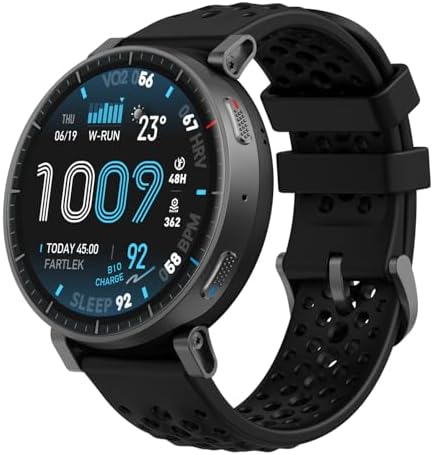
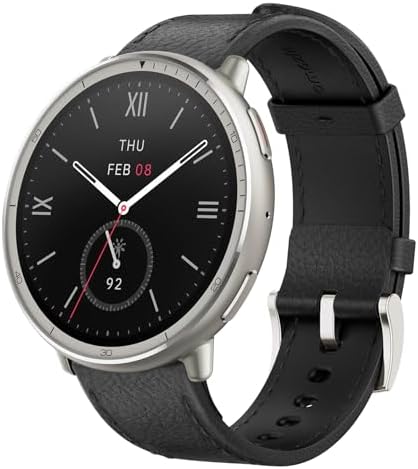
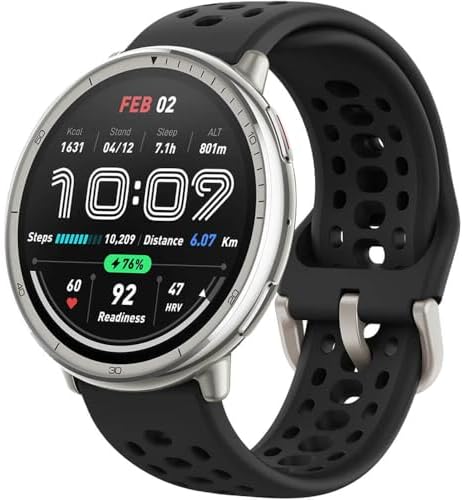
The Amazfit Active Max Smart Watch 1.5″ 48mm GPS offers a similar 48mm footprint but is engineered to reduce mass. Amazfit markets the Active Max as a larger, brighter lifestyle watch: the 1.5-inch AMOLED panel reaches 3,000 nits of peak brightness, and the body is tuned for all-day and all-night wear. It offers the same screen size class in a chassis designed for comfort during a commute.
Battery Life: The Numbers That Actually Matter
Amazfit states that the T-Rex 3 delivers up to 27 days in typical use and 13 days under heavy use, with GPS modes spanning 42 hours in accurate mode and 114 hours in long-battery mode. These figures are aimed at multi-day hikes and weekend expeditions where charging is an afterthought.
The Active Max carries a quoted figure of up to 25 days in typical use. On paper, the gap is only two days, but the practical comparison depends on GPS usage. A runner logging an hour of GPS daily will see the T-Rex 3 separate itself, because its long-battery GPS mode is an explicitly published number. If your routine is mostly wrist-time with occasional outdoor sessions, the Active Max’s 25-day rating is more than sufficient for most users.
Display Brightness and Readability
Both watches use a 1.5-inch AMOLED panel, so the resolution class and colour depth are comparable. The Active Max is the model Amazfit promotes most heavily on brightness, quoting 3,000 nits peak, a figure that matters on open water, snowfields, and mid-summer trails. The T-Rex 3 does not market itself around a specific nit figure; its display is tuned for legibility with gloves and in low light, where a dark interface at low brightness is the sensible default.
For a buyer who spends most of the day outdoors in direct sun, the Active Max has the stronger documented brightness claim. For a buyer who spends most of the day in mixed indoor light and wants a screen that does not glare through a shirt cuff, either panel will be more than adequate.
Navigation, Maps, and Onboard Storage
Offline maps appear in both product descriptions, so the differentiator is not whether maps exist but how they are used. The T-Rex 3 is listed with offline maps alongside 170 fitness and sport modes and a full GPS toolkit, a combination aimed at route planning before the watch leaves the house. The Active Max is listed with 4GB of onboard storage and the same broad sport-mode count, with offline maps supporting its mapping features.
The trade-off here is subtle: the T-Rex 3’s outdoor brief implies route-heavy use, while the Active Max’s 4GB of storage implies more room for music and app data. If you download maps and tracks frequently, both are workable; if you also want local media, the Active Max’s storage figure is the one to note.
Training Features and Everyday Smarts
Both watches list 170+ workout modes, including smart training and recovery-oriented tracking. The T-Rex 3 adds AI and voice control to its feature sheet, while the Active Max is positioned as a heart-rate and sleep tracker with a broad feature set inside Amazfit’s app ecosystem. In practice, the T-Rex 3 reads as a tool for structured outdoor effort, and the Active Max reads as a window into daily activity, sleep, and stress.
Neither model is a dedicated technical dive computer or a laboratory instrument. Both are consumer smartwatches that record heart rate, sleep, and exercise sessions, and both rely on the paired phone app for deeper analysis. A buyer deciding between them should weigh how much of the T-Rex 3’s tactical touring feature set they will actually use before paying for it.
Straps, Serviceability, and Long-Term Ownership
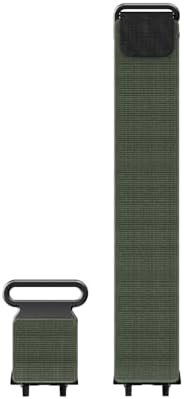
Both watches accept quick-release straps, and the 22mm size class keeps replacement options wide. The Amazfit Hyrox 22mm Silicone Replacement Strap is listed as compatible with the T-Rex 3 and several other Amazfit models, which simplifies upkeep if the original strap wears out or if you want a lighter band for daily use.
For a smaller-wrist buyer who likes the Active Max concept but finds 48mm too large, the Amazfit Active 2 Smart Watch 1.32″ 44mm GPS applies the formula to a 1.32-inch AMOLED panel, a 44mm case, and a 10-day battery rating, trading the Max’s 25-day figure for a more compact fit. The 44mm option also fits narrower wrists under a shirt cuff.
Which Amazfit Buyer Are You?
The choice resolves quickly once use case is settled. Buy the T-Rex 3 if the watch will spend meaningful time on trails, in cold weather, or on multi-day trips, and if the 27-day/13-day battery split and 42-hour accurate GPS mode match your session lengths. Buy the Active Max if you want a large, very bright screen for daily wear, general fitness tracking, and sleep monitoring, and if the lighter chassis matters more than published GPS endurance.
Anyone comparing the broader line can explore the Amazfit brand’s wider catalogue to see how the T-Rex and Active families sit alongside other models. The T-Rex 3 wins on brute endurance and published outdoor capability; the Active Max wins on brightness and everyday comfort at the same 48mm size class. Neither is the wrong answer, but only one is designed around the trail.