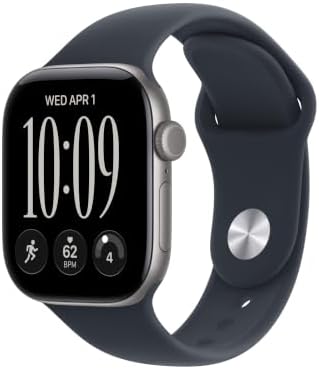
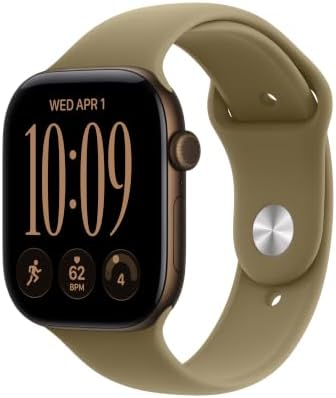
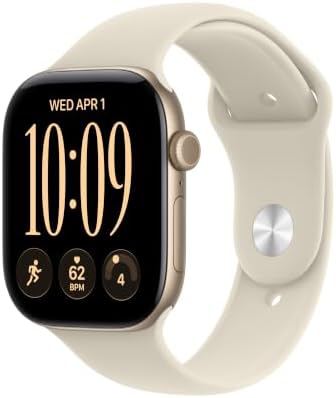
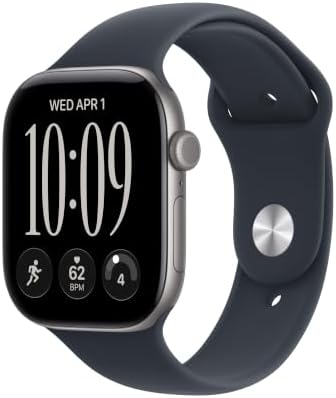
The Series 12 and the Series 11 sit close together in the Apple lineup, yet they differ in ways that matter once the spec sheet is set aside. This guide exists to help buyers choose between the two generations with clear eyes, whether upgrading from an older model or buying a first smartwatch. Apple positions the Series 12 alongside the Ultra 4 and SE 3 in its current comparison pages, while the Series 11 remains a current-generation product in its own right, so the decision is less about old versus new and more about which set of capabilities fits a daily routine. Treat the comparison below as a reference worth keeping, because every row maps to a real trade-off rather than a marketing talking point.
| Feature & Selling Point | Apple Watch Series 12 | Apple Watch Series 11 |
|---|---|---|
| Processor | S11 chip, 64-bit dual-core | Prior-generation S-series chip |
| Neural Engine | 4-core Neural Engine | Prior-generation Neural Engine |
| Onboard Storage | 64GB | Standard capacity |
| Audio Intelligence | Live Rewind, Siri Recap, Shazam, Sound Recognition | Standard Siri and audio features |
| Case Height (Aluminum/Titanium) | 46mm | 46mm |
| Case Width (Aluminum/Titanium) | 40mm | 39mm |
| Case Depth (Aluminum/Titanium) | 9.7mm | 9.7mm |
| Ceramic Case Option | 47mm height, 41mm width | Not listed |
| Display Resolution (46mm) | Matching 46mm class | 416 by 496 pixels |
| Display Area (46mm) | Matches case envelope | 1196 sq mm |
| Weight (Aluminum, GPS) | Comparable 46mm class | 37.8 grams |
| iPhone Requirement | iPhone 11 or later, iOS 27 or later | iPhone 11 or later, iOS 27 or later |
| Best Suited For | Buyers wanting the newest audio and on-device intelligence | Buyers who want proven health tracking and a familiar platform |
| Upgrade Trigger | Faster neural processing and expanded storage | Solid starting point with established feature set |
The most consequential difference is the S11 chip with its four-core Neural Engine and 64GB of storage, which changes what the watch can do locally with audio and voice assistant tasks. The second difference is the appearance of a ceramic case option on the Series 12, a material choice the Series 11 specifications do not list. Everything else, from the 46mm case height and 9.7mm depth to the shared iPhone 11 and iOS 27 requirement, stays largely consistent, so the buying decision narrows to two questions: how much on-device intelligence is needed, and whether a ceramic case belongs on the wrist.
Processing Power and What It Actually Changes
Apple specifies the Apple Watch Series 12 GPS + Cellular 46mm with an S11 chip built around a 64-bit dual-core processor and a four-core Neural Engine. That combination is the foundation for the audio intelligence features Apple lists on the specification page. Live Rewind, Siri Recap, Shazam song identification, and Sound Recognition all depend on local machine learning rather than a round trip to a paired iPhone. The practical result is faster response times and a watch that behaves more independently when the phone is in another room or out of battery.
On the Series 11, the chip is a previous-generation design that still handles the core smartwatch workload comfortably. Daily notifications, workout tracking, sleep score measurement, and always-on display behavior all run without complaint. The distinction is not that the Series 11 feels slow; it is that the Series 12 extends what is possible on the wrist by adding headroom for the audio features Apple has introduced. For a buyer who mostly reads messages and logs runs, that headroom may never be tapped. For someone who dictates replies, uses voice search heavily, or relies on sound recognition alerts at home, the newer neural engine has tangible value.
Storage and Offline Media
The 64GB capacity on the Series 12 matters most for offline use cases. Podcasts, downloaded playlists, and apps intended to run without a phone all consume space, and a 64GB envelope removes the anxious playlist pruning that smaller capacities encourage. Gym sessions without a phone become more practical when a long queue of episodes and albums can live on the watch permanently.
Audio Intelligence in Daily Use
Shazam integration identifies music without pulling out a phone, a small convenience that becomes habitual. Sound Recognition can alert the wearer to specific environmental sounds and is genuinely useful for people with hearing concerns or for households where safety monitoring matters. Siri Recap reduces the friction of asking the assistant what was missed, and Live Rewind supports re-reading a conversation or notification thread. None of these features are essential for every user, but they are the clearest argument for stepping up to the newer generation.
Case Materials, Sizes, and Wrist Presence
Both generations share a 46mm case height and a 9.7mm depth for aluminum and titanium models, so they sit on the wrist with a broadly similar profile. The Series 12 measures 40mm wide against 39mm on the Series 11, a one-millimeter difference that is not quite invisible but is unlikely to alter a purchase decision on its own. The weight quoted for the Apple Watch Series 11 GPS 46mm is 37.8 grams in aluminum with GPS, a comfortable mass for all-day wear and sleep tracking. The Series 12 in matching materials should feel similar, given the shared dimensions.
The meaningful structural change is ceramic. Apple’s Series 12 documentation lists a ceramic case variant at 47mm height and 41mm width, slightly larger than the aluminum and titanium versions. Ceramic brings a different tactile and visual character than anodized aluminum: a polished, dense surface that resists daily scuffs and reflects light differently across the curve of the case. Buyers who treat a smartwatch as jewelry as much as a tool will find the ceramic option attractive. Buyers shopping on value may not, because ceramic is a premium material and the aluminum versions already deliver the same internals at a lighter weight.
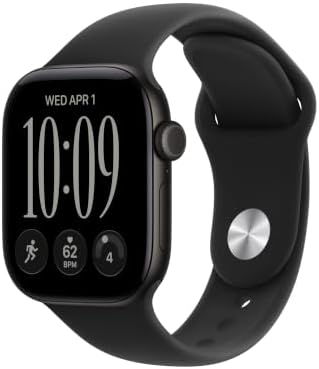
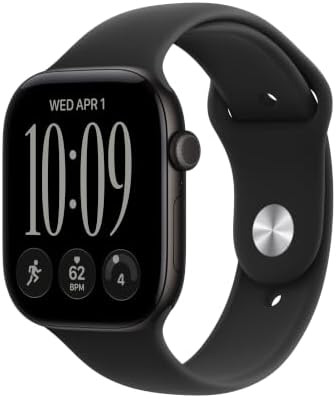
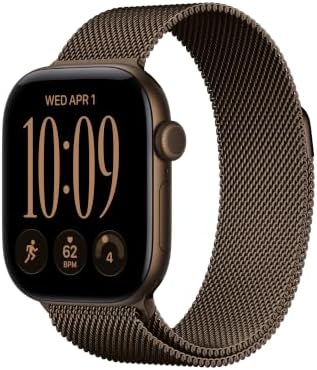
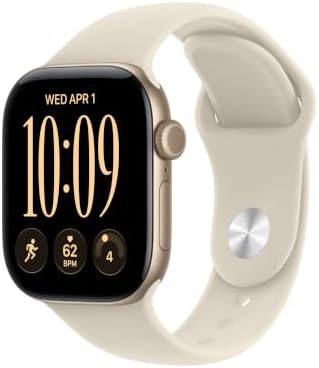
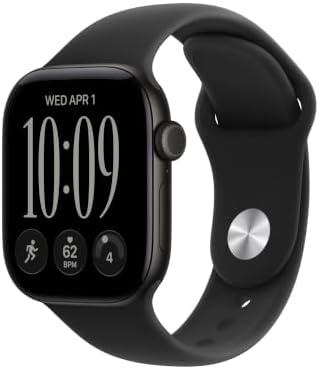
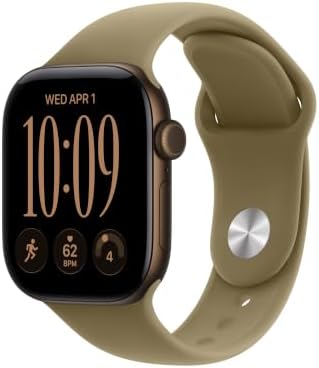
Color and band choice remain personal, and both generations offer the standard Apple mix of aluminum finishes and sport bands. The jet black aluminum of the Series 11 configuration paired with a black sport band remains one of the cleanest, most neutral looks in the lineup, working as well with office attire as with running gear. The Series 12 adds its own finishes, and the ceramic option creates a dressier lane for formal settings where a matte aluminum case feels too casual.
Display, Battery, and Everyday Endurance
Apple’s Series 11 specifications list a 416 by 496 pixel resolution and a 1196 sq mm display area for the 46mm model, along with an always-on display. The Series 12 matches the 46mm height and the 9.7mm depth, and its display envelope stays within the same class, so readability in sunlight and at a glance in low light remains a strength on both. Expect similar brightness behavior, similar always-on dimming, and the same glanceability that makes Apple Watch notifications so easy to absorb.
Battery discussion for these models must stay grounded. Apple publishes battery figures on the technical specification pages, and the exact numbers should be read from the official listing rather than inferred. What is safe to say is that the shared 9.7mm case depth suggests neither generation has bulked up to accommodate a dramatically larger cell, so both remain typical Apple Watch affairs: roughly a day of normal use, with sleep tracking working best when a short charging window is carved out in the morning or evening. Buyers who prioritize multi-day endurance should look at the Ultra line instead, which is a different product tier entirely.
Charging speed and connector behavior follow Apple’s current fast-charge approach on both generations. The more relevant endurance question concerns what drains the battery. Running the four-core Neural Engine for audio features on the Series 12 will consume power, but Apple tunes these features for a full-day envelope, so the practical difference between generations is small. The Series 11, without those features active, may register slightly longer stretched usage for identical tasks, though the gap is not a reason to choose it on its own.
Health and Fitness Tracking Across Generations
Both smartwatches are fitness trackers at heart. The Series 11 description highlights sleep score, fitness tracking, health monitoring, an always-on display, and water resistance, and all of those capabilities carry forward on the Series 12. Workout detection, heart rate monitoring, sleep score analysis, and water resistance for pool swims and shower wear remain core to the Apple Watch experience on either model. The practical difference is not the sensor suite; it is the software layer built on top of it.
Where the Series 12 pulls ahead is the audio and assistant layer that wraps around the health data. Sound Recognition can respond to environmental cues, and the improved neural engine means voice queries about workout history or sleep trends resolve faster. For athletes who dictate training notes mid-run or query the assistant between sets, the newer chip smooths the experience. For most users, both generations deliver the same reliable closed-loop fitness experience that made Apple Watch a fixture in gyms.
- Sleep score: available as a nightly readiness and quality summary
- Workout tracking: running, cycling, swimming, strength, and more
- Water resistance: suitable for pool swims and everyday splashes
- Always-on display: keeps key metrics visible without a wrist raise
- Health monitoring: heart rate and related wellness metrics
iPhone compatibility is identical on both models. Apple requires an iPhone 11 or later running iOS 27 or later, so households with older phones should verify their device before purchasing either watch. This shared requirement means the decision does not hinge on ecosystem support; it hinges on features and materials.
Which Buyer Should Choose Which
The Series 12 is the right choice for buyers who want the most current on-wrist intelligence, who use voice and audio features heavily, who want 64GB of local storage for offline media, or who are drawn to the ceramic case as a design statement. The S11 chip with its four-core Neural Engine is the clearest forward-looking investment, and the expanded storage future-proofs the watch against a growing library of apps and downloaded content. Anyone upgrading from a Series 8 or older will notice the generational jump most acutely on the Series 12.
The Series 11 is the smarter buy for buyers who want proven Apple Watch fundamentals without paying for audio intelligence features they may not use. Its health tracking suite is complete, its always-on display and 46mm screen remain first-rate, and its jet black aluminum configuration is one of the most versatile looks in the catalog. Shoppers who mainly read notifications, log workouts, and track sleep will get most of the value at a lower tier of the lineup. The one-millimeter width difference and shared case height mean the fit is essentially the same.
The decision criteria are straightforward. First, ask whether Live Rewind, Siri Recap, Shazam, and Sound Recognition belong in a daily routine; if yes, the Series 12 justifies itself. Second, decide whether ceramic appeals as a material statement or whether aluminum remains the practical default. Third, confirm the paired iPhone meets the iOS 27 requirement. Answer those three questions honestly and the choice becomes obvious, because everything else about these two smartwatches is closer than the generation labels suggest, and the right pick is simply the one whose strengths align with how the watch will actually be worn.