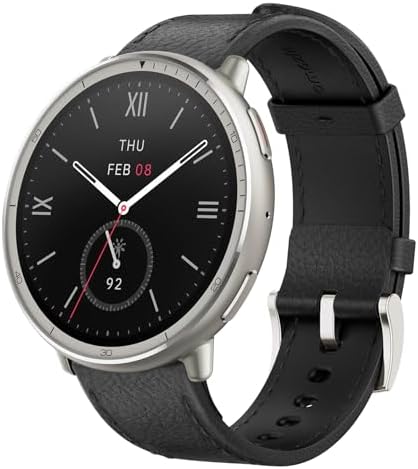
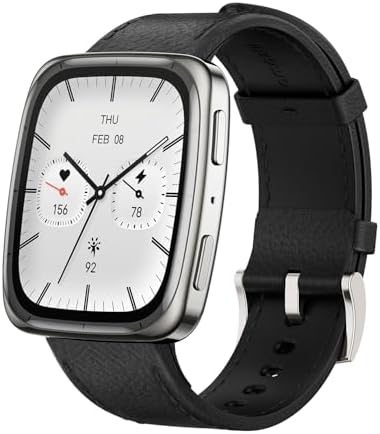
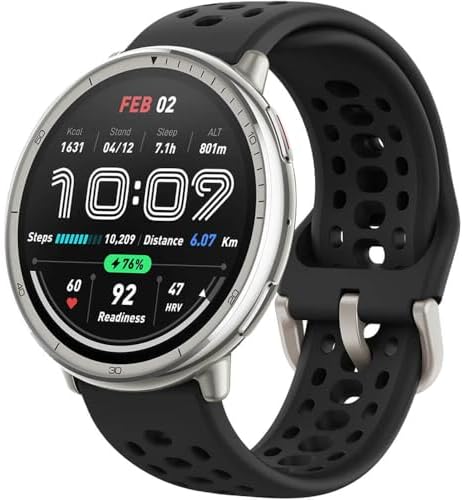
The Amazfit Helio Strap and the Google Fitbit Air take opposite routes to the same goal: continuous heart rate, sleep staging, and workout logging without the bulk of a full smartwatch. One is a screenless band built to disappear on the wrist, the other a modular tracker shaped around swappable bands and a mature companion app. This comparison is written as a buying guide worth keeping, because the right answer depends on how you train, recover, and sleep rather than on brand loyalty.
Every row below reflects a decision point that changes the purchase: sensor behavior, battery expectations, strap comfort, app depth, and how each device handles strength work and race-day scenarios. The trade-offs are laid out plainly so the right device can be matched to the right routine.
| Feature and Selling Point | Amazfit Helio Strap | Google Fitbit Air |
|---|---|---|
| Form Factor | Screenless strap | Modular tracker with swappable bands |
| Display | None; review via app only | On-device readout |
| Stated Battery Life | Up to 10 days | Multi-day, varies by usage |
| Heart Rate Tracking | Continuous optical monitoring | Continuous optical monitoring |
| Sleep Tracking | 24/7 sleep staging | Sleep stages with app scoring |
| Sport Modes | 27 modes | Core activity modes via app |
| Strength Training Support | Dedicated lifting and Hyrox race modes | Workout logging with app coaching |
| Band Material Options | Elastomer strap, buckle clasp | Polyester, nylon, and elastane yarn loop |
| Band Fit Adjustment | Buckle holes | Micro-adjustable loop |
| Charging Method | Dedicated charging base | Proprietary charger |
| Compatibility | Android and iPhone | Android and iPhone |
| Companion App Depth | Zepp app with training load review | Fitbit app with established coaching library |
| Best Suited To | Lifters, Hyrox athletes, minimalists | Daily wellness users, band-swappers |
| Key Trade-Off | No on-wrist display | Shorter stretch between charges |
The most consequential difference sits in the first two rows: the Helio Strap removes the screen entirely, while the Fitbit Air keeps a readout on the device. Everything else flows from that decision. If glancing at pace or heart rate mid-set matters, the Fitbit Air has the edge. If a bare wrist during deadlifts and race prep matters more, the Helio Strap makes its case.
What Each Device Is Actually Built For
The Amazfit Helio Strap fitness tracker is a screenless training tool. Amazfit positions it around 24/7 activity and sleep tracking, continuous heart rate, a 10-day battery rating, 27 sport modes, and strength training profiles that include Hyrox race support. That last point is revealing: Hyrox is a hybrid fitness racing format combining running and functional stations, and a device tuned for it is being marketed to people who train in gyms and on tracks in the same week.
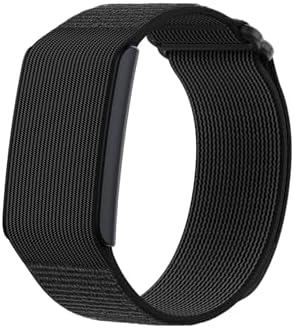
The Google Fitbit Air follows a different philosophy. Fitbit has long positioned its trackers as everyday wellness companions, and the Air continues that lineage with a module that pairs to swappable bands. The company’s own care guidance recommends only Fitbit branded or authorized bands, which underlines how tightly the accessory ecosystem is controlled. A good example is the Google Fitbit Air Performance Loop Band, a micro-adjustable loop woven from polyester, nylon, and elastane yarn, described as workout-friendly and compatible only with the Air.
Those two product descriptions tell you most of what you need. Amazfit is selling training specificity; Fitbit is selling wearable comfort and an established app ecosystem. Neither is a flaw in the other’s design, but they point at different buyers.
Heart Rate, Sleep, and the Value of Continuous Data
Both devices rely on optical heart rate monitoring, and both promise continuous capture across the day and night. The distinction is what happens to that data afterward. Fitbit has spent years building sleep staging and readiness-style scoring into its app, and that maturity is a genuine asset for anyone who wants a daily summary rather than a raw data dump.
The Helio Strap leans toward training load interpretation. With 27 sport modes and dedicated strength profiles, the Zepp app is structured around matching recorded effort to specific activities rather than producing a single wellness score. For a lifter logging sets or a hybrid racer reviewing station splits, that orientation is more useful than a generalized readiness number.
Sensor Behavior During Strength Work
Wrist-based optical sensors struggle during gripping activities, because forearm tension restricts blood flow near the sensor window. A screenless strap can be worn slightly higher on the forearm or tightened without a display pressing into the wrist, which is a practical advantage during barbell work. The Helio Strap’s dedicated lifting modes suggest Amazfit has tuned the algorithms with this in mind.
Overnight Tracking and Comfort
Sleep data is only as good as the wearer’s willingness to keep the device on. At roughly the size of a fabric loop, the Fitbit Air with a Performance Loop Band is among the least intrusive options for overnight wear, and the micro-adjustable closure lets the fit be dialed in without a buckle digging into the wrist. The Helio Strap’s elastomer band with buckle holes is functional but less forgiving for side sleepers.
Battery Life and Charging Routines
Amazfit rates the Helio Strap at up to 10 days of battery life, which changes charging from a nightly ritual into a roughly weekly errand. For anyone who has abandoned a tracker because it died mid-week, that margin matters. A charging base is required, and the Amazfit Charging Base for Various Models is shared across several devices in the lineup, including the Active Max, T-Rex 3 Balance 2, and T-Rex 3 Pro, which reduces cable clutter for households running more than one Amazfit device.
The Fitbit Air sits in the multi-day range rather than the multi-week range, and the practical difference depends on how you use it. Continuous heart rate, frequent GPS-linked workouts, and always-on features all draw down the reserve. Users who charge a phone every night will find a tracker cadence unremarkable; users who want to forget about charging until the weekend will notice the gap.
Charging hardware is worth a thought before buying. The Helio Strap’s base is a small dedicated dock, while the Fitbit Air uses a proprietary cable. Neither is a deal-breaker, but losing either accessory is an annoyance that a shared dock or a spare cable solves cheaply.
App Ecosystems and Long-Term Usefulness
Fitbit’s app remains one of the most polished in the category. Sleep scores, activity rings, and guided programs have been refined over many product generations, and the Air inherits that infrastructure. For someone who wants a device to nudge them toward better habits, the software is the product as much as the hardware.
Amazfit’s Zepp app has matured considerably, and its strength is training analysis rather than lifestyle coaching. Amazfit’s lineup shares this platform across its trackers and watches, so data persists if you later add a higher-end model to the rotation. For users deep into structured training, that continuity is worth more than a cleaner dashboard.
Fitbit’s own product care documentation stresses using only branded or authorized accessory bands, a policy that protects sensor accuracy and water resistance ratings. It also means replacement bands come from a narrower pool. Amazfit’s accessory range is similarly proprietary for charging, but third-party straps are more common for its standard lug designs.
Comfort, Fit, and All-Day Wearability
The Fitbit Air’s strongest argument is fit. A micro-adjustable woven loop distributes pressure evenly and eliminates the buckle lump that irritates wrists during push-ups or typing. Polyester, nylon, and elastane yarns dry quickly and hold tension without pinching, which explains why this band style has become standard for workout-focused trackers.
The Helio Strap prioritizes simplicity with a conventional buckle strap. It is secure and stable during vigorous movement, and the absence of a screen means nothing snags on clothing or presses against a barbell. The trade-off is adjustability: buckle holes create coarse fit steps, and users between sizes may find the fit either slightly loose or slightly tight.
For sleep tracking specifically, the lighter, flatter profile of a woven loop usually wins. For heavy lifting, a snug buckle strap prevents sensor lift during wrist extension. Neither design is universally better, but each suits a defined use case.
The Verdict for Different Athletes
Anyone whose training week combines barbell sessions with running intervals should look hard at the Helio Strap. The 27 sport modes, Hyrox mode, and 10-day battery rating line up with that schedule, and the screenless design means fewer distractions and fewer things to break. The Fitbit brand’s Air remains the better pick for daily wellness tracking, overnight comfort, and users who value a mature coaching app and glanceable stats over training-specific analytics.
The decision comes down to identity as much as specification. A device that disappears on the wrist and delivers a weekly charge report suits the lifter who wants data filed away for review, not displayed mid-set. A device with a readable screen and a plush woven band suits the all-day wearer who checks steps between meetings and reviews sleep over morning coffee. Matching the hardware to the habit is the real buying criterion, and both products serve their chosen wearer well.